AI Engineer · LinkedIn

Parth Shettiwar

I build machine learning systems that connect research with real-world impact. At LinkedIn’s Notifications-AI team, I work on recommendation systems, sequential user modeling, and Transformer-based generative recommenders.

Previously, I built multi-agent conversational AI at DoorDash and production RAG pipelines for healthcare documents at HiLabs. My interests span generative AI, natural language processing, computer vision, graph networks, and bandit algorithms.

I hold an MS in Computer Science from UCLA and a B.Tech in Electrical Engineering with honors from IIT Bombay, with minors in Computer Science and AI & Data Science.

When I'm not working, you'll probably find me on a court — pickleball, tennis, or badminton these days, and I used to be a rated table tennis player. I'm also a big traveler, with 30+ US national parks and 15+ countries behind me and plenty more on the list.

Parth Shettiwar

Industry experience

Recommendation systems, conversational AI, and applied research.

LinkedIn Notifications-AI

May 2025 – Present

AI Engineer · Recommendation systems · Sunnyvale, CA

  • Led training and production integration of TransAct embeddings into a multi-task mixture-of-experts ranking model, with Scala + Spark daily incremental action-sequence pipelines and feature-importance ablations. Achieved a 0.7% AUC gain and 0.5% DAU lift.
  • Built Transformer-based generative recommenders for sequential user-action modeling, delivering 2.5% AUC gains over baseline. Optimized training and inference with multi-item scoring, sequence packing, and bucketed padding; incorporated DeepSeekMoE, RoPE, and relative attention bias while preserving model size and FLOPs.

DoorDash Project Apollo

Jun 2024 – May 2025

Machine Learning Engineer · Agentic AI & NLP · Sunnyvale, CA

Designed a Conversation Intelligence Service for support chatbots using a multi-agent architecture. Built an ontology graph to orchestrate LLM agents in place of fixed workflows, alongside automated prompt optimization and auto-labeling to improve agent performance.

HiLabs Contracts AI

Apr 2023 – Jun 2024

Data Scientist · NLP · Bethesda, MD

Led development and productionization of an end-to-end RAG pipeline for healthcare contract extraction using Vision Transformers, OpenSearch, and Textract. Built BERT reranking with triplet loss, LoRA fine-tuning of Mistral 7B, intelligent chunking, HDBSCAN clustering, and LayoutLM-based document features.

Amazon Search ranking

Jun – Sep 2022

Applied Scientist Intern · Recommendation systems · Palo Alto, CA

Designed a position-debiased ranking model using a dual learning algorithm and formulated RankWise AUC for offline evaluation. Achieved a 1.1% improvement on HERO and stronger RankWise AUC performance at seven of the top eight positions.

Microsoft R&D India Offline voice commanding

May – Jul 2020

Data Scientist Intern · NLP · Hyderabad, India (remote)

Built an intent classifier for offline voice commands in Microsoft Word. Reduced net model size from 3.6 MB to 268.9 KB with a custom TensorFlow Lite binary. Work accepted at MLADS Synapse 2020.

Research & selected projects

Published work and research across vision, learning, and decision-making.

DeepHS-HDRVideo: Deep High Speed High Dynamic Range Video Reconstruction illustration
ICPR 2022

DeepHS-HDRVideo: Deep High Speed High Dynamic Range Video Reconstruction

ICPR 2022 · Research internship, IIT Gandhinagar · Mar–Jul 2020

Zeeshan Khan, Parth Shettiwar, Mukul Khanna, Shanmuganathan Raman

Developed a weakly supervised framework for high-frame-rate, high-dynamic-range video reconstruction from LDR frames. Combined depth- and flow-based frame interpolation with an attention-based merge network.

Non-Stationary Bandits with Periodic Variation illustration
AAMAS 2024

Non-Stationary Bandits with Periodic Variation

AAMAS 2024 (extended abstract) · Research project, IIT Bombay · Mar–May 2021

Titas Chakraborty, Parth Shettiwar

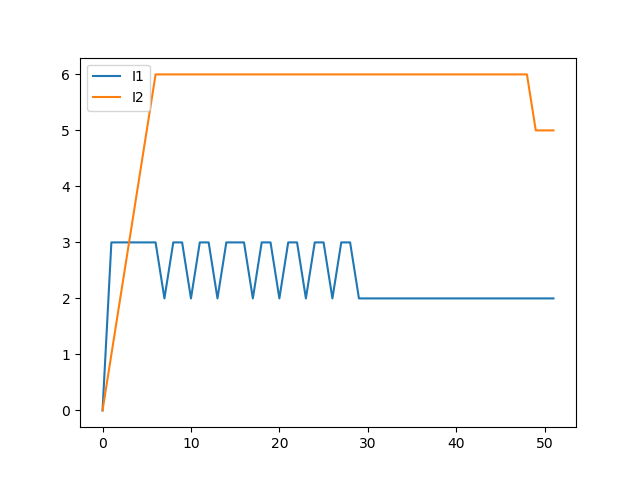
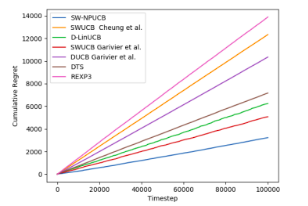
Introduced a non-stationary bandit setting with periodically varying arm means. Proposed D-PUCB, SW-PUCB, and SW-NPUCB for perfect and nearly periodic settings and proved their regret bounds.

Few-Shot Class-Incremental Learning illustration

Few-Shot Class-Incremental Learning

Undergraduate thesis · IIT Bombay · Jul–Dec 2020

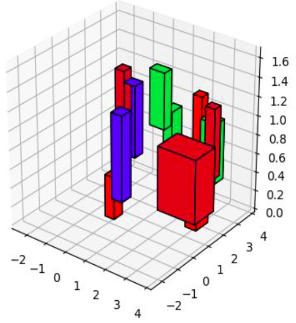
Proposed a prototypical GAN with distillation loss to address catastrophic forgetting in few-shot class-incremental learning on complex datasets.

Game Theoretic Approach to Optimal Network Allocation illustration

Game Theoretic Approach to Optimal Network Allocation

Research project · IIT Bombay · Feb–Apr 2020 · Guide: Prof. Prasanna Chaporkar

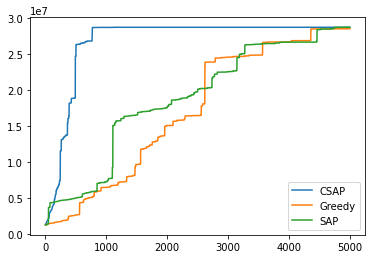
Modeled the NP-hard optimal network allocation problem as an exact potential game. Compared best-response dynamics, spatial adaptive play, and concurrent SAP on simulated inputs.

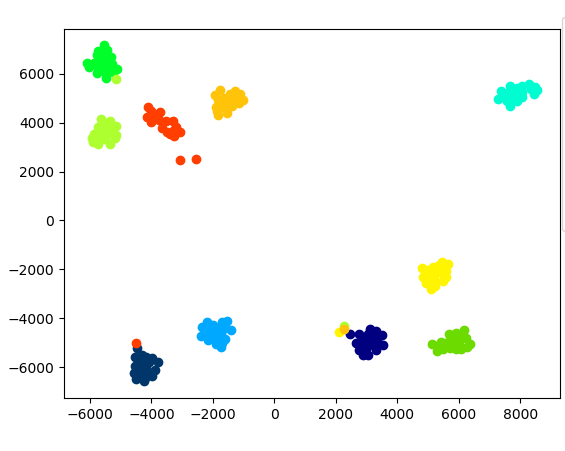
Reasoning over Incomplete Knowledge Graph via Graph Structure Learning illustration

Reasoning over Incomplete Knowledge Graph via Graph Structure Learning

Guide: Prof. Yizhou Sun, UCLA

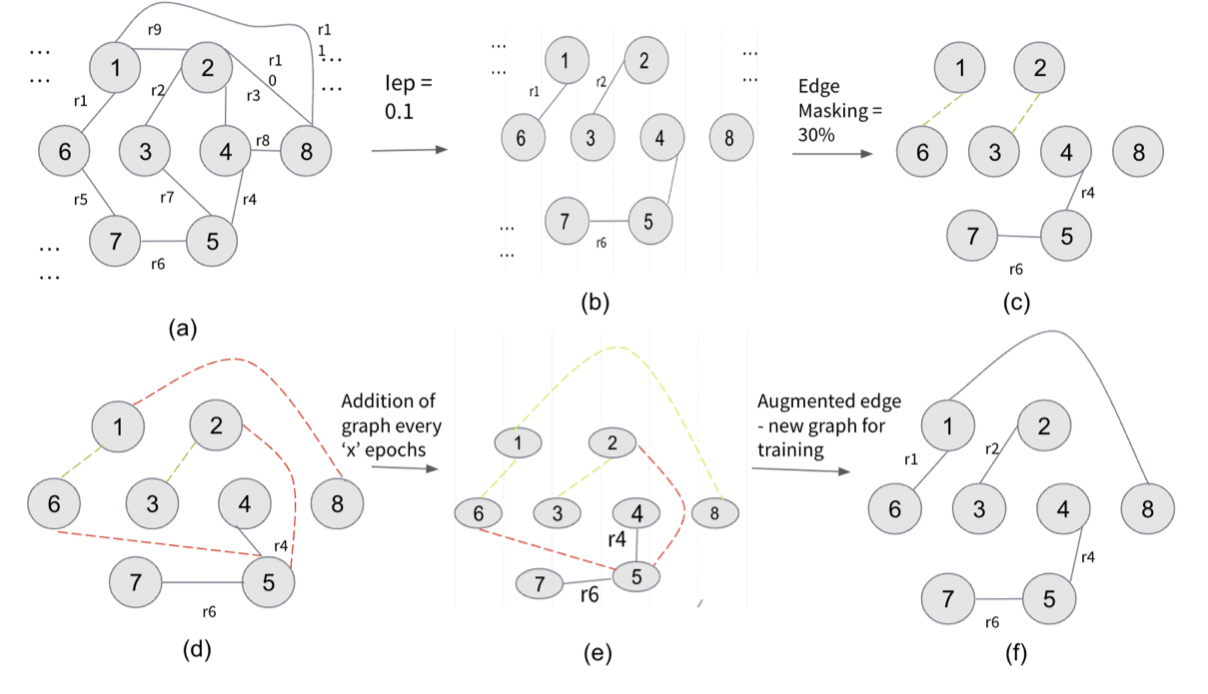
Explored knowledge-graph completion through graph structure learning, K-hop positive and negative edge sampling, and multi-headed attention with CompGCN. Evaluated on FB15K-237 and WN18RR.

Offline Voice Commanding in Microsoft Word App illustration

Offline Voice Commanding in Microsoft Word App

Guide: Abhishek Agarwal, Microsoft R&D India

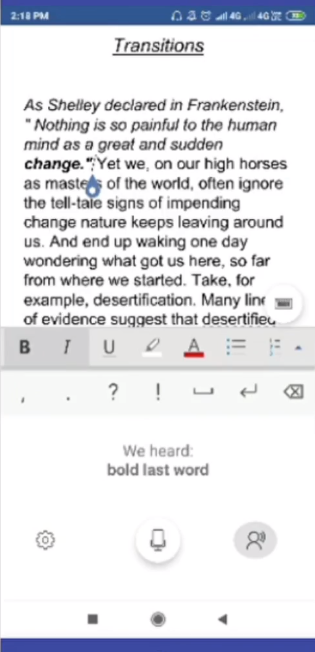
Built a size-optimized, dynamically downloadable intent classifier for offline voice commands in Microsoft Word. A custom TensorFlow Lite binary reduced the net model size from 3.6 MB to 268.9 KB. Accepted at MLADS Synapse 2020.

Data Generation for Person Intrusion Detection Using Human Pose Transfer illustration

Data Generation for Person Intrusion Detection Using Human Pose Transfer

Guide : Prof. Shanmuganathan Raman, IIT Gandhinagar

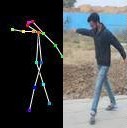
Used a two-way GAN conditioned on an input image and target pose to generate human images in varied poses and backgrounds for intrusion detection.

OSR - Open Set Recognition using Side Information illustration

OSR - Open Set Recognition using Side Information

Guide : Prof. Biplab Banerjee, IIT Bombay

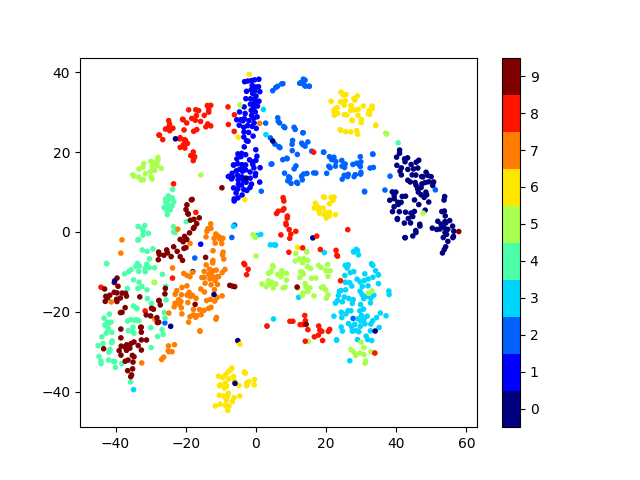
Combined label-consistent K-SVD sparse coding with Kernel Null Foley–Sammon Transform features for open-set recognition on MNIST.

More projects

A collection of earlier research explorations and course projects.

A Sparse Hard-label Black-box Attack using Accelerated Proximal Gradient Methods illustration

A Sparse Hard-label Black-box Attack using Accelerated Proximal Gradient Methods

Course:CS 269: Adversarial Learning

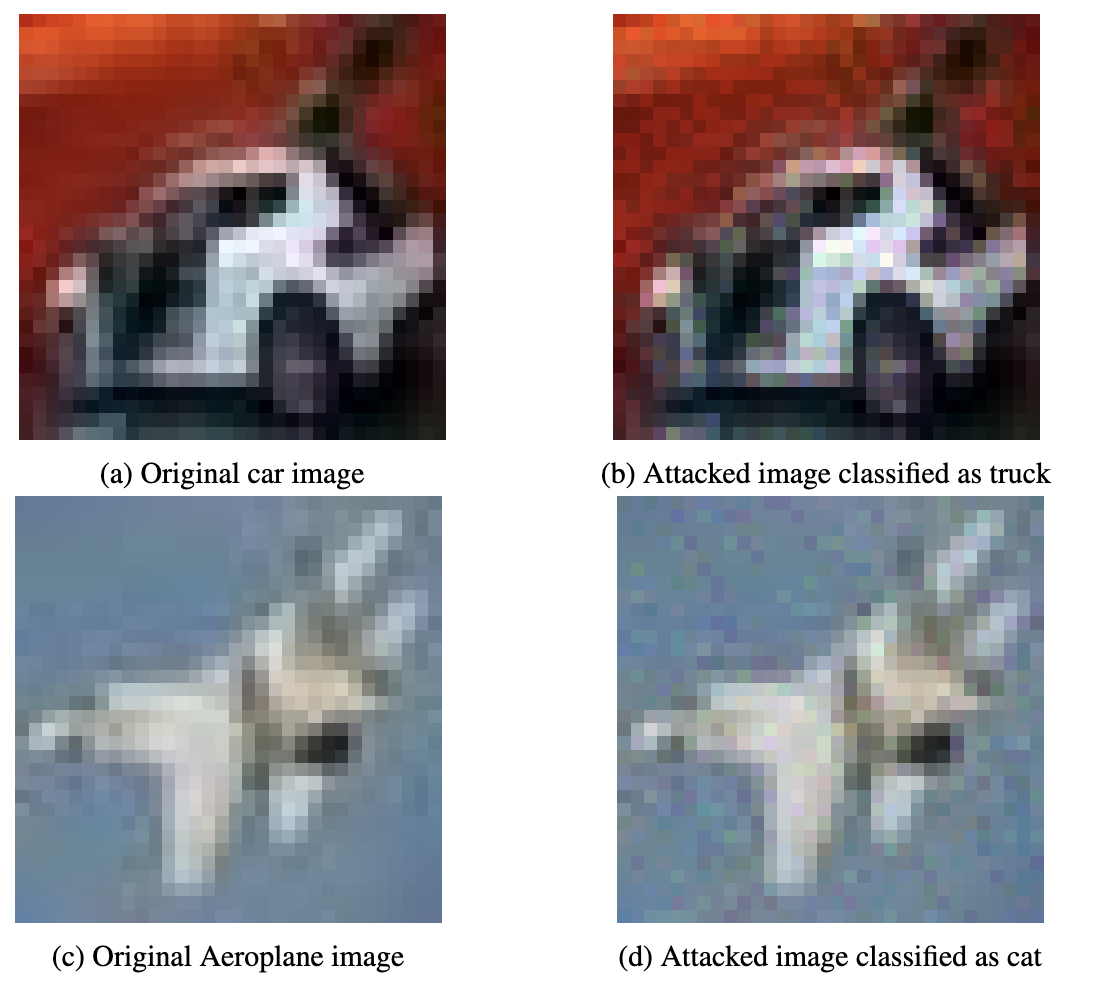
Developed SparseAPG, a proximal-gradient approach to sparse, hard-label black-box adversarial attacks. Combined a homotopy method with bounded perturbations to generate imperceptible attacks using only a few pixels.

An Analysis of Compression Methods for Deep learning networks illustration

An Analysis of Compression Methods for Deep learning networks

Course:CS 259: Learning Machines

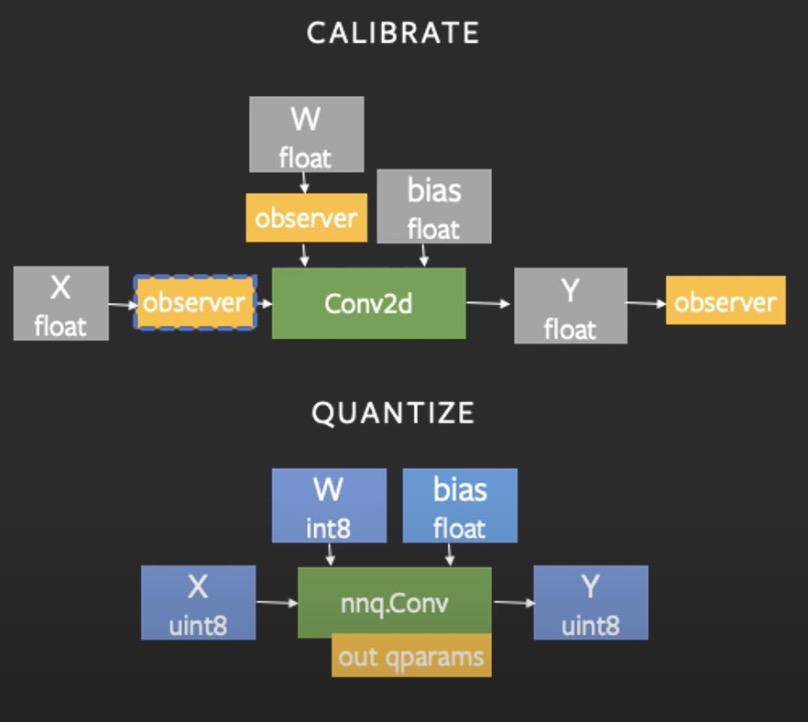
Evaluated network compression methods using accuracy, inference time, and model size. Studied individual and combined techniques, including kernel-level analysis on a Titan V GPU.

MARS-GM: Multi Headed Recommendation System using Graphical Modeling illustration

MARS-GM: Multi Headed Recommendation System using Graphical Modeling

Course:CS 249: Special Topics - Advanced Data Mining

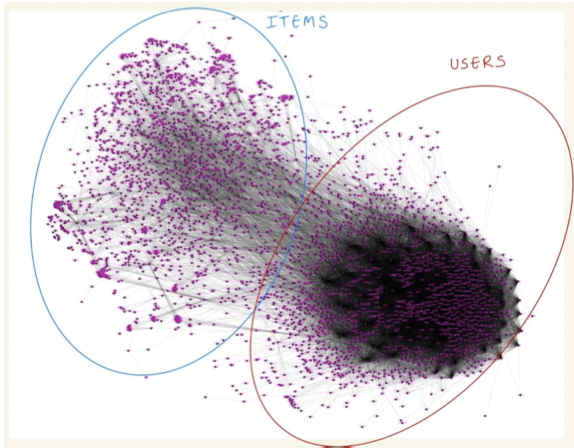
Extended GraphRec with multi-headed attention, adversarial learning, and item–item interactions to learn coherent user and item embeddings. Evaluated the approach on FilmTrust.

Emotional Talking-Face Generation with Deformable Convolutional Networks illustration

Emotional Talking-Face Generation with Deformable Convolutional Networks

Course: CS269 - Advanced Topics in Artificial Intelligence: Deformable Models in Computer Vision

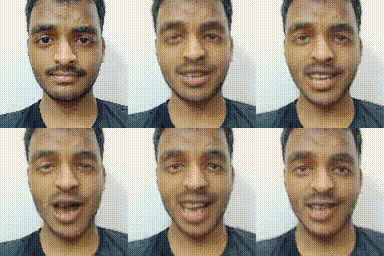
Explored talking-face generation with deformable layers and attention modules, synchronizing lip and facial motion with input audio. Compared approaches using SSIM and PSNR.

Genomic Imputation using Deep Learning illustration

Genomic Imputation using Deep Learning

Course: M226 - Machine Learning for Bioinformatics

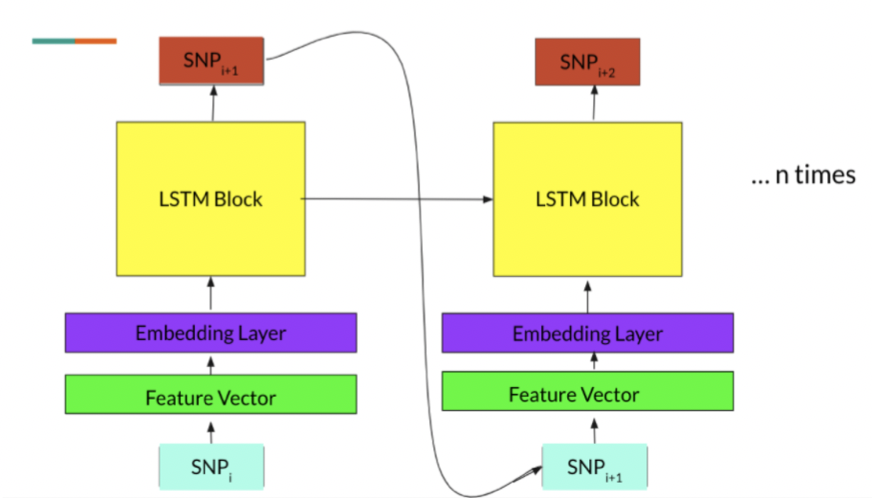
Framed genome imputation as autoregressive language generation to infer unobserved genotypes with deep learning.

Semantic Image Inpainting using DCGAN illustration

Semantic Image Inpainting using DCGAN

Course: CS736 - Medical Image Computing

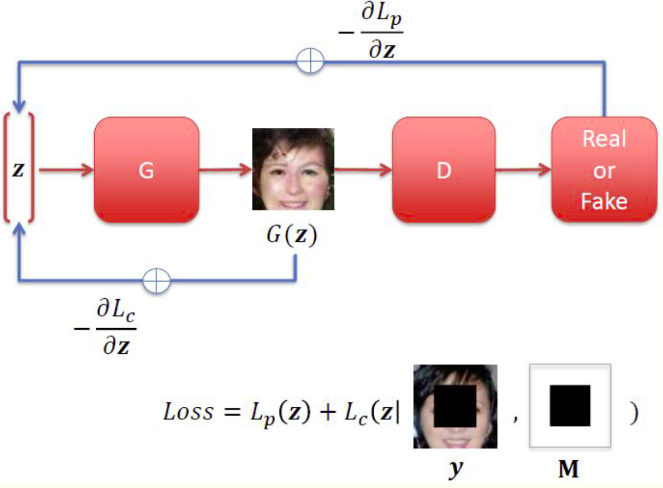
Implemented semantic image inpainting by optimizing a latent vector with context and prior losses, followed by Poisson blending.

3D Object Detection and Semantic Map Generation illustration

3D Object Detection and Semantic Map Generation

Robotic Vision Scene Understanding Challenge 2021 · Guide: Prof. Sharat Chandran, IIT Bombay, Course CS763: Computer Vision

Combined RGB and depth images with object detection networks and 3D non-maximum suppression to construct a semantic map with object bounding boxes.

Image Toonification illustration

Image Toonification

Guide: Prof.Biplab Banerjee, Research Project

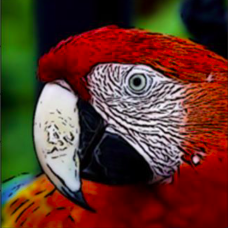
Adapted CartoonGAN for anime-style image translation, initializing the generator with image abstraction using difference-of-Gaussians and bilateral filters.

Controlling Epidemics and Economics Activity in Interacting Communities illustration

Controlling Epidemics and Economics Activity in Interacting Communities

Guide: Prof. D. Manjunath, Supervised Research Exposition

Studied the trade-off between epidemic control and economic activity with an SAIR model for interacting communities.

Efficient Neural Machine Translation illustration

Efficient Neural Machine Translation

Course: CS626 - Speech, Natural Language Processing and the Web

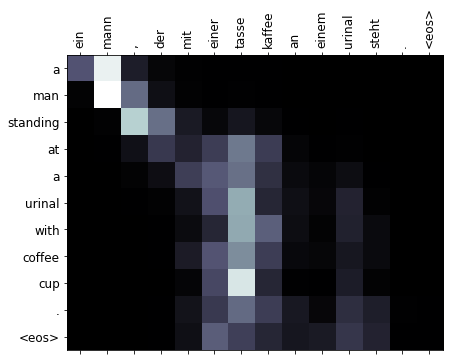
Built a compact RNNsearch-based neural machine translation model on Multi30K, comparing training time, parameter count, and BLEU score with a Transformer.

Image Inpainting using the Deep Image Prior illustration

Image Inpainting using the Deep Image Prior

Course: GNR638 - Machine Learning for Remote Sensing-II

Implemented Deep Image Prior for zero-shot image reconstruction, exploiting the structure of a CNN to recover images with extensive missing pixels.

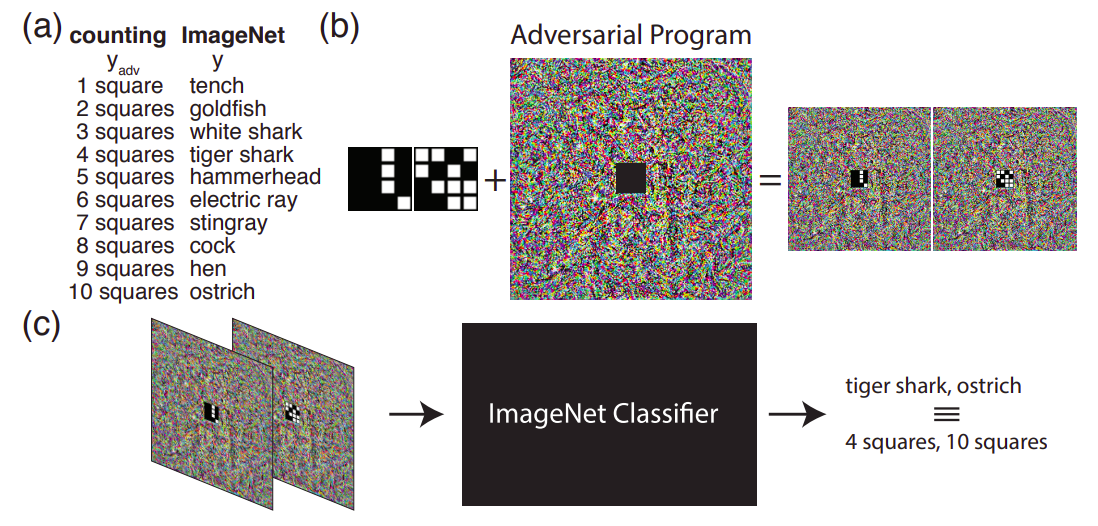
Adversarial Reprogramming of Neural Networks illustration

Adversarial Reprogramming of Neural Networks

Course: CS663 - Digital Image Processing

Computed a shared adversarial perturbation to reprogram an ImageNet classifier for CIFAR-10 without changing the original network.

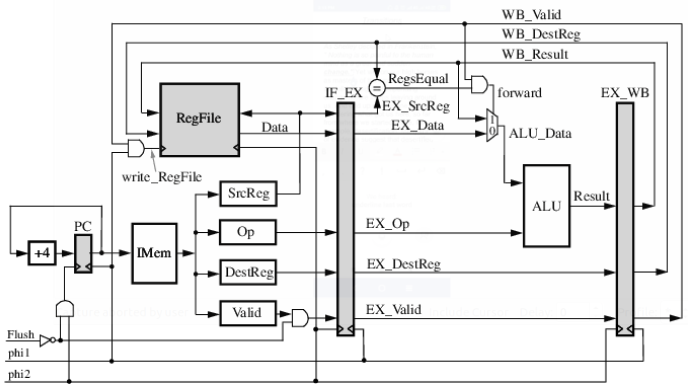
Pipeline Processor IITB RISC illustration

Pipeline Processor IITB RISC

Course: EE309 - Microprocessors

Implemented a 16-bit, six-stage pipelined processor based on Little Computer Architecture, supporting 15 instructions and single- and double-wide fetch execution.

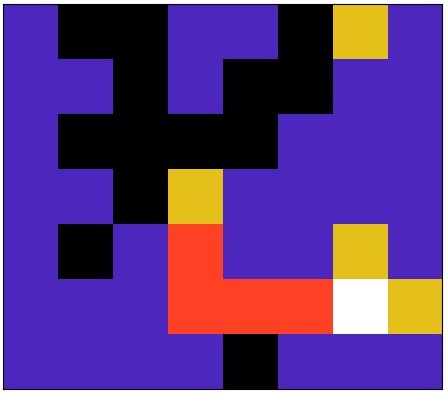
Maze Solver illustration

Maze Solver

Course: CS747 - Foundations of Intelligent and Learning Agents

Used value iteration to find shortest paths from a starting point to multiple endpoints in a maze.

Parse Trees Converter illustration

Parse Trees Converter

Course: CS626 - Speech, Natural Language Processing and the Web

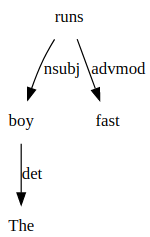
Built a tool for converting between constituent and dependency parse trees.

Emotion TV illustration

Emotion TV

Institute Technical Summer Project

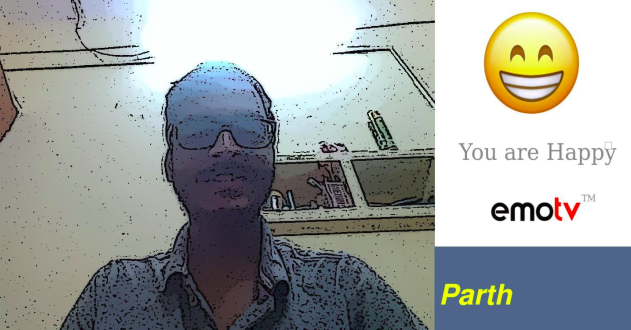
Developed a mood-prediction application with mood-based music selection and caricature generation.

Education

University of California, Los Angeles

Sep 2021 – Mar 2023

MS in Computer Science · Major GPA: 4.0/4.0

Indian Institute of Technology Bombay

Jul 2017 – Jul 2021

B.Tech in Electrical Engineering with honors · Major GPA: 9.49/10

Minors in Computer Science and AI & Data Science · AI & Data Science minor GPA: 10/10

Teaching

Selected achievements

Skills

Languages
Python, C++, SQL, Scala, PySpark, Java, MATLAB, CUDA, Haskell, VHDL
ML & data
PyTorch, TensorFlow, Keras, OpenCV, NumPy, Pandas, scikit-learn, Spark
Infrastructure
Kubernetes, Docker, Google Cloud, AWS

Contact

For conversations about machine learning, research, and collaboration: